
RETROCHILD: Children, trauma and political violence in Italo-Slovene Borderland (1945-1960)
RETROCHILD offers a unique insight into the relationship between childhood and trauma by exploring the psychological impacts of war and other forms of political violence on children in the Italo-Slovene Borderland, during the post-war period (1945–1960).
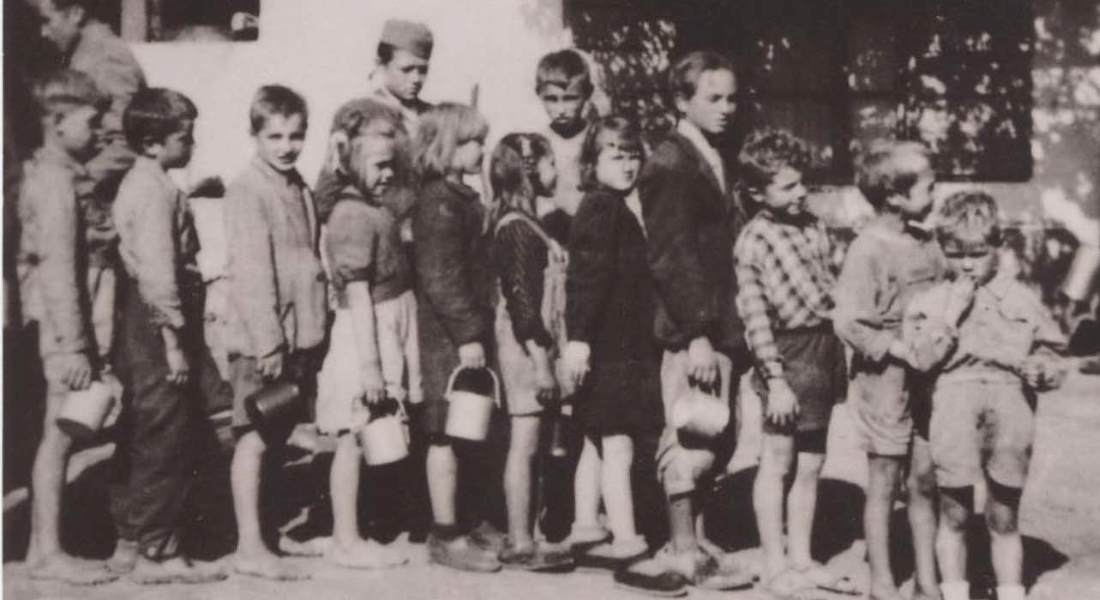
In order to examine the universalisations related to the meanings and motivations behind the narratives of childhood trauma, RETROCHILD applies a novel “retrograde approach”, which, instead of starting from the events presumably involving psychological distress, develops an analysis from three subsequent examples of social, medical and legal interventions: the first intervention involves orphans and abandoned children, the second children in psychiatric care and the third juvenile delinquents.
The research will be conducted in three phases: I will analyse the discourse of experts who worked with children; collect archival material from relevant institutions and lastly analyse the children's own experiences.
I address how the (psychological) effects of war and other forms of political violence on children were explained by those who, in their professional capacities, dealt with children in “psy” care, with juvenile delinquents and orphans from the region and more broadly from Italy and Yugoslavia. When did they start to address the problem of childhood psychological (war-related) trauma? To what extent were they involved in international scientific debates on the matter?
After World War II, Europe saw a decisive shift in how children’s psychological well-being was understood. Although the idea of “children as war victims” existed after WWI, it had been limited mainly to physical suffering and material hardship. After 1945, it expanded to include emotional and psychological trauma, prompting national and international initiatives such as SEPEG and the International Union for Child Welfare. These developments also stimulated the evolution of child psychiatry and related disciplines.
Italy entered the postwar period with an already strong pre-WWII foundation in child psychiatry, closely tied to pedagogy and special education. Influential figures like De Sanctis, Montesano, and Montessori promoted interdisciplinary cooperation, and institutional frameworks such as public schooling shaped the field’s direction. After the war, juvenile delinquency—publicly visible and linked to wartime disruption—became a central concern. Italian psychiatrists participated actively in SEPEG and further specialised through collaboration with Swiss and French experts. Giovanni Bollea emerged as a key figure, helping establish the Centri Medico-Psico-Pedagogici (from 1947 onward), multidisciplinary centers modeled on European and American child guidance clinics. By 1960, over 200 such centers existed across Italy.
In Slovenia (Yugoslavia), immediate postwar efforts focused not on trauma but on material needs, infant mortality, and socialist education. Orphans were placed in collective homes and depicted as thriving under socialism. However, in the early 1950s a marked shift occurred: psychological, psychiatric, and even psychoanalytic knowledge became influential. New counseling centers followed international models and brought together psychologists, pedagogues, social workers, pediatricians, and the first child psychiatrist, Bazilija Pregelj. They treated learning difficulties, behavioural issues, and juvenile delinquency.
Slovenian experts embraced attachment theory yet sought to reconcile it with the socialist working mother. Pregelj and others shaped early child psychiatry while integrating international perspectives into the specific social and political context of postwar Yugoslavia.
- Moderator and paper presenter at the EAHMH 2025 Conference (Berlin, August 2025):
- Chair of panel National and International Approaches to Children’s Mental Health and Welfare
- Paper: Postwar Child Welfare and Psychological Care: A Comparative Analysis of Italy and Slovenia.
- Research Seminar: Juvenile delinquents in “psy” perspective (3 June 2025).
- Conference paper: Juvenile Delinquency and Psychiatry in Socialist Slovenia (1945–1955) at the workshop Cultures of Trauma in the Soviet Union and Eastern Europe, University of Warwick (8 May 2025).
- Contribution: Slovenska psihijatrija i maloljetni prijestupnici u poslijeratnom razdoblju at the X. Dani Andrije Štampara – Izazovi u javnom zdravstvu nekad i danas (Slavonski Brod, 28 March 2025).
- Conference paper: Effects of WWI on Children: Perspectives from Italy and Slovenia at the scientific conference Decoding the Historical Patterns. Exploring The Dynamics Ofsegregation And Integrationin Policies And Institutions for Children And Youth Withdisabilities In The Yugoslavregion 1919−1992. Institute of Contemporary History, Ljubljana (3–4 October 2024).
- Conference paper: Slovene and Italian Child Psychiatry after WWII: A Comparison at the Children’s Mental Health Workshop, University of Copenhagen (20 June 2024).
- Presentation of the Marie Curie Project RETROCHILD at the CultMind Center (5 April 2024).
Researchers
| Name | Title | Phone | |
|---|---|---|---|
| Antic, Ana | Professor | +4535330754 | |
| Cergol Paradiz, Ana | Associate Professor | +4535327536 |
Funding

The project is funded by Marie Skłodowska-Curie Actions, the European Commission.
Project period: January 2024 - March 2026